


Climbing Kilimanjaro Through Lemosho Route
Home » Climbing Kilimanjaro Through Lemosho Route
Climbing Kilimanjaro through the Lemosho Route is widely regarded as one of the most scenic and strategically designed ways to reach the summit of Mount Kilimanjaro. Rising to 5,895 meters above sea level, Kilimanjaro is Africa’s highest mountain and the tallest free-standing mountain in the world. Each year, between 35,000 and 50,000 trekkers attempt to reach Uhuru Peak, according to data from the Tanzania National Parks Authority.
Among all established routes, Lemosho consistently records some of the highest summit success rates, often ranging between 85 percent and 90 percent when completed over eight days. This is not accidental. The route is structured to maximize acclimatization while allowing climbers to experience nearly every ecological zone found on the mountain.
For travelers seeking both success and scenery, the Lemosho Route offers a balanced and well-paced approach supported by experienced mountain crews and regulated safety standards under TANAPA and the Kilimanjaro National Park management framework.
Route Statistics and Performance Insights
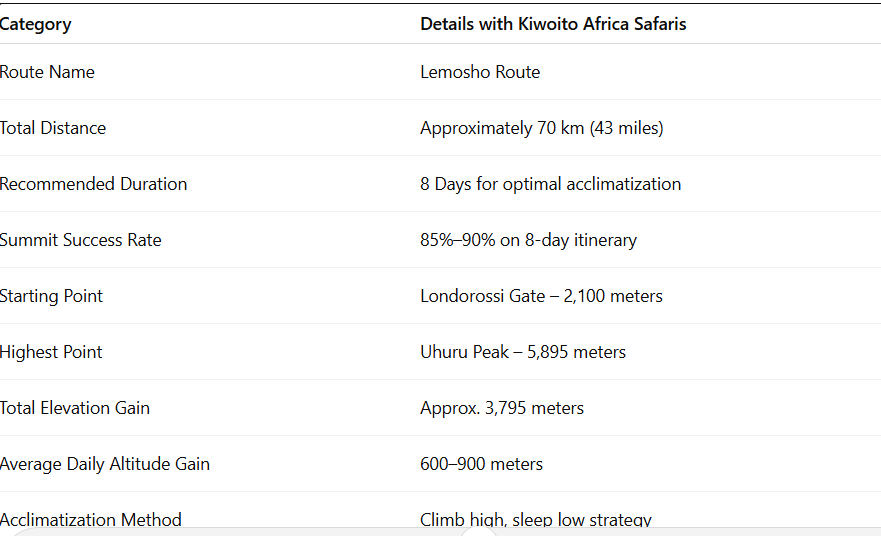
Understanding the performance data behind Climbing Kilimanjaro Through Lemosho Route helps explain why it stands out. The standard duration ranges between seven and eight days, covering approximately 70 kilometers from Londorossi Gate to Mweka Gate. The longer duration significantly reduces the risk of Acute Mountain Sickness compared to shorter routes such as Marangu or Umbwe.
Research published by high-altitude medical institutions, including the International Society for Mountain Medicine, confirms that gradual ascent profiles improve oxygen adaptation and overall summit probability. The Lemosho Route follows a climb-high, sleep-low pattern that supports this physiological process.
The route begins at around 2,100 meters and gradually ascends through rainforest, heath, moorland, alpine desert, and finally arctic summit conditions. Because of this gradual progression, climbers gain altitude more safely while building endurance.
Uniqueness of the Lemosho Route
Scenic Diversity and Remote Start
Climbing Kilimanjaro through the Lemosho Route begins on the western side of the mountain, far from the busier Marangu entry point. The early days pass through dense montane rainforest where colobus monkeys are often seen in the canopy. This remote start creates a quieter and more immersive experience during the first half of the trek.
As the route progresses, the terrain opens into the Shira Plateau, one of the largest high-altitude plateaus in the world. The plateau offers expansive views of Kibo’s snow-capped summit and dramatic volcanic formations shaped millions of years ago during Kilimanjaro’s geological evolution.
Superior Acclimatization Profile
One of the defining strengths of Climbing Kilimanjaro Through Lemosho Route is its acclimatization design. After crossing the Shira Plateau, climbers ascend toward Lava Tower at approximately 4,630 meters before descending to Barranco Camp. This altitude rotation strengthens the body’s adaptation response and significantly improves summit readiness.
Professional mountain guides operating under Kilimanjaro National Park regulations conduct daily health checks using pulse oximeters and symptom assessments. This structured monitoring contributes to the high success rate associated with the route.
Iconic Landmarks Along the Route
The Barranco Wall is a highlight of the journey. While it appears intimidating from below, it is a non-technical scramble guided carefully by experienced crew members. The sense of achievement after reaching the top provides a psychological boost before the final summit push.
The southern circuit trail offers panoramic views of glaciers such as the Heim and Kersten glaciers, which remain critical indicators of climate change according to environmental studies published by NASA and glaciology research teams.
Kilimanjaro Lemosho Route Itineraries
Best Time for Climbing Kilimanjaro Through Lemosho Route
Timing significantly affects the climbing experience. The most favorable months are January to March and June to October. These periods align with Tanzania’s dry seasons, offering clearer skies, lower precipitation, and safer trail conditions.
January to March typically provides colder summit nights with occasional snow, creating striking photographic conditions. June to October offers more stable weather and slightly warmer daytime trekking temperatures.
The long rains usually occur from March to May, while short rains appear in November. Although climbing remains possible year-round, wet conditions increase trail difficulty and reduce visibility. Most professional operators, including those adhering to Kilimanjaro Porter Assistance Project standards, recommend avoiding peak rainfall periods unless climbers are highly experienced.
Climbing Lemosho Route With Kiwoito Africa Safaris
Choosing the right operator directly influences summit success and overall experience. Kiwoito Africa Safaris delivers professionally guided climbs with experienced mountain crews, certified guides, and structured acclimatization schedules aligned with best practices in high-altitude trekking.
The company prioritizes climber safety, transparent logistics, and ethical porter treatment. From pre-climb consultations to post-summit support, Kiwoito Africa Safaris ensures that every phase of Climbing Kilimanjaro Through Lemosho Route is managed with precision and care.
If you are planning your Kilimanjaro expedition and want a reliable partner grounded in experience and responsible tourism standards, Kiwoito Africa Safaris provides the expertise required for a successful summit.
Request proposal now!
Lemosho Route Frequently Asked Questions
What makes the Lemosho Route a good choice?
The Lemosho Route offers a high summit success rate of about 85 to 90 percent on the eight day climb. The gradual ascent improves acclimatization. Climbers enjoy quieter trails, rainforest scenery, and wide views across the Shira Plateau. Guides often recommend it for safety and scenery.
How difficult is the Lemosho Route?
The route is moderate to challenging. No technical climbing skills are required, though strong fitness and mental endurance are important. Daily hikes last five to eight hours, with a longer summit night. Altitude is the main challenge.
What is the success rate of the Lemosho Route?
Success rates range between 85 and 90 percent on the eight day itinerary. The gradual altitude gain and climb high sleep low approach improve summit chances.
How many days are recommended for the Lemosho Route?
Eight days are recommended. The extra acclimatization day improves safety and increases the likelihood of reaching the summit.
When is the best time to climb the Lemosho Route?
The best months are January to March and June to October. These periods offer drier weather, clearer views, and better trekking conditions.