Kilimanjaro trekking via Marangu route
Home » Kilimanjaro trekking via Marangu route
Kilimanjaro Trekking via Marangu Route is one of the most well known ways to climb Mount Kilimanjaro, Africa’s highest mountain at 5,895 meters above sea level. This route has welcomed climbers for decades and continues to attract thousands of people every year. It is often chosen by first time climbers because it offers a clear trail, reliable infrastructure, and a structured daily routine that feels less overwhelming for those new to high altitude trekking.
The Marangu Route begins on the southeastern side of Mount Kilimanjaro and takes climbers through a series of changing landscapes that clearly show the mountain’s natural diversity. From dense rainforest to wide open moorland and finally to the dry alpine desert near the summit, each day brings a visible change in scenery and atmosphere. What many climbers remember most about Kilimanjaro Trekking via Marangu Route is the sense of progression. You feel the mountain rising around you day by day, while sharing the journey with other trekkers in communal huts, which creates a supportive and social experience.
Understanding Kilimanjaro Trekking via Marangu Route
Through Key Insight
Kilimanjaro Trekking via Marangu Route covers approximately 72 kilometers from the starting gate to the summit and back. Most climbers complete the route in either five or six days, and this choice plays a major role in overall success. While the trail itself is not technical, the real challenge comes from altitude. Oxygen levels drop significantly as you gain height, and the body needs time to adjust.
Climbers who attempt the five day itinerary often face lower success rates, sometimes as low as forty percent or less. This is mainly because there is limited time for acclimatization. In contrast, those who choose the six day option, which usually includes an extra acclimatization day at Horombo Hut, see much higher success rates.
Understanding Kilimanjaro Trekking via Marangu Route
Through Key Insight
Kilimanjaro Trekking via Marangu Route covers approximately 72 kilometers from the starting gate to the summit and back. Most climbers complete the route in either five or six days, and this choice plays a major role in overall success. While the trail itself is not technical, the real challenge comes from altitude. Oxygen levels drop significantly as you gain height, and the body needs time to adjust.
Climbers who attempt the five day itinerary often face lower success rates, sometimes as low as forty percent or less. This is mainly because there is limited time for acclimatization. In contrast, those who choose the six day option, which usually includes an extra acclimatization day at Horombo Hut, see much higher success rates.
Many experienced guides report summit success reaching seventy percent or more when proper pacing, hydration, and rest are followed.
These numbers show an important truth about Kilimanjaro Trekking via Marangu Route. Reaching Uhuru Peak is less about speed and more about patience. Listening to your body, walking slowly, and allowing time for adaptation greatly increases the chance of standing on the summit.
What Makes Kilimanjaro Trekking via Marangu Route Unique
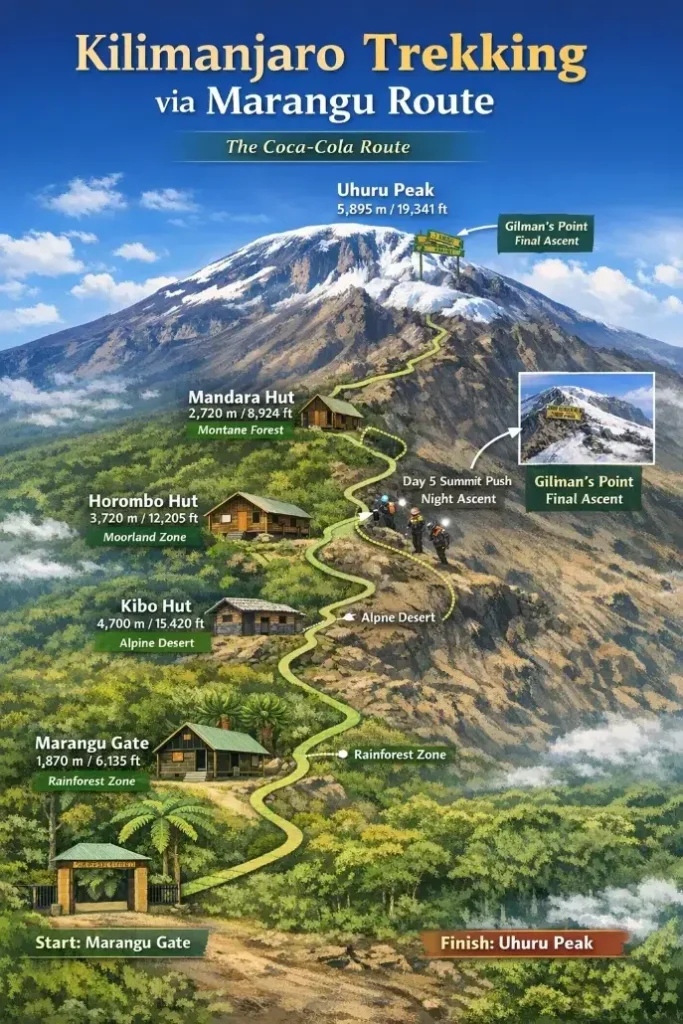
One of the most distinctive features of Kilimanjaro Trekking via Marangu Route is the use of permanent mountain huts instead of tents. It is the only route on Mount Kilimanjaro that offers this type of accommodation. Climbers stay at Mandara Hut, Horombo Hut, and Kibo Hut, each providing basic shelter, bunk beds, and shared dining spaces. This setup offers protection from rain and cold, especially during the night, and reduces the need to carry heavy camping equipment.
The hut system also creates a strong sense of community. Climbers from different countries and backgrounds share meals, stories, and encouragement. For many people, this social environment reduces the feeling of isolation that can come with long mountain treks. The route also follows the same path for both ascent and descent, allowing climbers to revisit familiar sections and notice details they may have missed while going up.
Kilimanjaro Trekking via Marangu Route passes through clearly defined ecological zones. The lower forest is rich with birdlife and monkeys, while the moorland introduces unique plants adapted to harsh conditions. Near the summit, the landscape becomes dry, rocky, and quiet, giving a powerful sense of how extreme the environment has become. Although the route can feel busier than more remote options, its strong support system and clear trails make it especially suitable for climbers with moderate fitness levels who value structure and comfort.
Why choosse Kiwoito Africa Safaris for Kilimanjaro trekking via Marangu route
Choosing the right operator is just as important as choosing the right route. Kilimanjaro Trekking via Marangu Route with Kiwoito Africa Safaris is designed to focus on safety, proper acclimatization, and genuine care for each climber. As a local Tanzanian company based in Arusha, Kiwoito Africa Safaris brings deep knowledge of Mount Kilimanjaro, its conditions, and the needs of climbers at different experience levels.
Their professional guides are trained to monitor altitude symptoms, manage pacing, and provide clear support throughout the trek. Small group sizes allow for personalized attention, while quality meals and organized logistics help climbers conserve energy for the climb itself. Kiwoito Africa Safaris also offers the flexibility to combine Kilimanjaro Trekking via Marangu Route with wildlife safaris or beach holidays in Zanzibar, creating a complete Tanzanian experience.
If Kilimanjaro Trekking via Marangu Route feels like the right path for you, Kiwoito Africa Safaris is ready to guide you with confidence, experience, and local expertise. Visiting their website is the first step toward turning your Kilimanjaro dream into a well prepared and unforgettable reality
Frequent asked questions
What is the best time to climb Mount Kilimanjaro via Marangu Route?
The best time to climb is during the dry seasons, which run from January to March and from June to October. During these months, rainfall is lower, trails are less muddy, and visibility at higher altitudes is usually clearer. These conditions improve safety and overall comfort on the mountain.
How hard is Marangu Route?
Although this route is often described as easier because it offers hut accommodation instead of camping, the ascent profile is relatively fast. The shorter acclimatization time increases the risk of altitude sickness. For this reason, many climbers still find it physically demanding and mentally challenging.
What are the huts like?
The route provides dormitory style huts at Mandara Hut, Horombo Hut, and Kibo Hut. These huts have bunk beds with mattresses and pillows. However, climbers must bring their own sleeping bags for warmth. Facilities are basic but offer more shelter compared to tent based routes.
How many days should I take?
A five day itinerary is possible, but it allows limited time for the body to adjust to altitude. A six day itinerary is strongly recommended because it improves acclimatization and increases summit success rates. The additional day usually includes an extra night at Horombo Hut with a short acclimatization hike.
What should I consider when packing?
Climbers should prepare for changing weather conditions. Temperatures can be warm at the base but drop well below freezing near the summit. Warm layers, waterproof gear, and proper footwear are essential.
How much should I budget for tips?
It is customary to tip the mountain crew, including guides, porters, and cooks. A general estimate is to budget at least 2000 US dollars or more per climber, depending on group size and service level.