Kilimanjaro trekking with Hebrew speaking guide
Home » Kilimanjaro trekking with Hebrew speaking guide
Mount Kilimanjaro stands at 5,895 meters above sea level and remains the highest mountain in Africa. Each year, an estimated 35,000 to 40,000 climbers travel to Tanzania to attempt the summit at Uhuru Peak. Although the climb does not require technical mountaineering skills, it demands endurance, discipline, and proper altitude adaptation. For Hebrew speakers, language plays a critical role in building confidence on the mountain. Kilimanjaro Trekking with Hebrew Speaking Guide allows climbers to clearly understand daily briefings, safety procedures, and acclimatization advice. When communication is natural and direct, decision making improves and anxiety decreases, especially at higher elevations where physical stress increases.
The Altitude Reality on Kilimanjaro
Success on Kilimanjaro depends heavily on route choice and the number of trekking days. Research and operator data show that shorter five day itineraries record summit success rates between 30 and 50 percent. The main reason is limited acclimatization time. At nearly 6,000 meters, oxygen levels are roughly 50 percent lower than at sea level. This reduction places significant strain on the body and increases the risk of altitude sickness. Routes that extend to six, seven, or eight days improve success rates to between 70 and 90 percent because the body adjusts more gradually.
When instructions about hydration, walking pace, breathing rhythm, and altitude symptoms are delivered in Hebrew, climbers are more likely to follow guidance correctly. Clear understanding leads to better hydration habits, controlled pacing, and earlier reporting of symptoms. These factors directly influence summit performance and safety outcomes.
The Route Experience with Hebrew Speaking Guide
Several routes lead to the summit, each with its own character. The Machame Route is one of the most popular because of its scenic landscapes and strong acclimatization profile. It usually takes six to seven days and covers about 62 kilometers. The Lemosho Route offers a longer and quieter approach in its early stages, which increases adaptation time and improves summit probability. The Marangu Route is unique because it uses hut accommodation instead of tents and covers approximately 72 kilometers.
Regardless of the selected path, climbers pass through five ecological zones. The journey begins in dense rainforest where colobus monkeys and tropical birds are common. The trail then transitions into moorland filled with giant senecio and lobelia plants. Higher up, the alpine desert presents wide open volcanic terrain before reaching the arctic summit zone. A Hebrew speaking guide not only translates safety instructions but also explains geological history, local culture, and environmental changes along the route. This transforms the climb from a physical effort into an educational and meaningful journey.
Summit Night and Group Communication
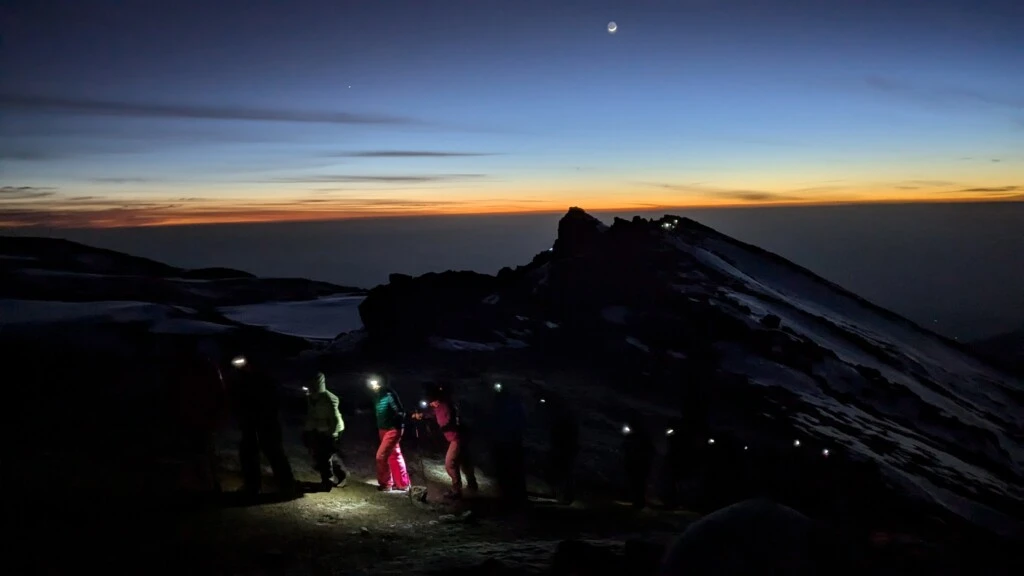
Summit night is the most demanding stage of Kilimanjaro Trekking with Hebrew Speaking Guide. The final ascent usually begins around midnight from high camp and takes six to eight hours of slow uphill walking. Temperatures can fall to minus 15 degrees Celsius near the crater rim. Fatigue and reduced oxygen make this stage mentally challenging. Clear instructions and encouragement in Hebrew help climbers maintain rhythm and confidence. Knowing exactly what to expect at each stage reduces fear and strengthens teamwork within the group.
Best Time for Kilimanjaro Trekking
Weather conditions strongly influence climbing comfort. The most stable periods occur during the two dry seasons. The first runs from January to March, and the second from June to October. During these months, rainfall is minimal and summit visibility is generally clear. Daytime temperatures in the rainforest zone range between 15 and 25 degrees Celsius, while summit temperatures drop well below freezing.
The months of July through September are particularly popular due to consistent weather patterns. Rainy seasons, mainly April to May and November, bring wetter trails and increased cloud cover. While climbing remains possible, dry season scheduling provides more predictable conditions and improved overall comfort.
Kilimanjaro Trekking with Hebrew Speaking Guide with Professional Support
A successful climb depends on more than motivation. Professional operations include licensed mountain guides, trained porters, structured meal planning, daily health checks, and emergency oxygen systems. When communication flows naturally in Hebrew, climbers feel comfortable discussing physical symptoms and asking questions. This improves medical monitoring and overall coordination.
Kiwoito Africa Safaris provides professionally organized Kilimanjaro expeditions led by experienced local teams. The company prioritizes realistic pacing, safety monitoring, ethical porter treatment, and quality equipment. Hebrew speaking climbers receive clear communication from arrival in Tanzania through summit day and descent. Their focus on structured acclimatization and personalized support increases both safety and satisfaction.
Frequent asked questions
Are Hebrew speaking guides available on Mount Kilimanjaro?
Yes, Hebrew speaking guides can be arranged through specialized operators. This service is especially important for Israel travelers who prefer clear and direct communication during safety briefings, altitude monitoring, and daily route explanations. Having a guide who speaks Hebrew improves understanding and creates a more comfortable environment throughout the climb.
How long does the climb usually take?
Most Kilimanjaro treks last between five and nine days. However, six to eight day programs are strongly recommended because they allow better acclimatization. Longer routes such as Lemosho or Northern Circuit significantly improve summit success rates compared to shorter five day options.
Is a licensed guide mandatory for Kilimanjaro?
Yes, Tanzanian regulations require every climber to be accompanied by a licensed local guide. Independent climbing is not permitted. Guides are responsible for navigation, safety supervision, altitude monitoring, and coordination with porters and cooks.
What is normally included in a trekking package?
A standard Kilimanjaro package usually includes airport transfers from Kilimanjaro International Airport, accommodation before and after the climb, park fees, professional mountain crew, meals during the trek, and camping or hut arrangements depending on the route. Equipment such as tents and emergency oxygen is also provided by professional operators.
Do I need special equipment for the climb?
Yes, proper mountain equipment is essential. Climbers need layered clothing for different temperature zones, waterproof outerwear, insulated jackets for summit night, gloves, hats, and well broken in hiking boots. Temperatures at the summit can drop far below freezing, so preparation is critical.