Tanzania safari to Ngorongoro crater
Home » Tanzania safari to Ngorongoro crater
A Tanzania safari to Ngorongoro Crater is one of the most remarkable wildlife journeys in Africa. The moment you arrive at the crater rim and look down into the vast caldera below, you sense that you are witnessing something ancient and extraordinary. Morning mist often lingers over the grasslands while herds of buffalo and zebra move quietly across the crater floor. The setting feels both dramatic and peaceful, shaped by millions of years of geological history and sustained by one of the most balanced ecosystems on the continent.
Located within the renowned Ngorongoro Conservation Area, this natural wonder draws travelers from around the world who seek exceptional wildlife viewing combined with cultural depth. Unlike many safari destinations where animals roam across endless plains, Ngorongoro offers a concentrated and reliable experience. The crater’s enclosed landscape creates an environment where wildlife thrives in impressive numbers throughout the year.
The Geological Wonder of Ngorongoro Crater
Ngorongoro Crater was formed approximately two to three million years ago when a massive volcano collapsed inward, creating the world’s largest intact and unfilled volcanic caldera. The crater stretches about 260 square kilometers, with walls rising roughly 600 meters above the floor. From the rim, the panoramic view reveals open grasslands, acacia forests, freshwater springs, and a soda lake shimmering in the distance.
This unique geological formation acts as a natural sanctuary for wildlife. Permanent water sources and fertile soils support year round grazing, which in turn sustains predators and herbivores in balanced numbers. The enclosed structure reduces migration compared to other parks, allowing many species to remain within the crater for most of their lives.
Wildlife Overview and Biodiversity
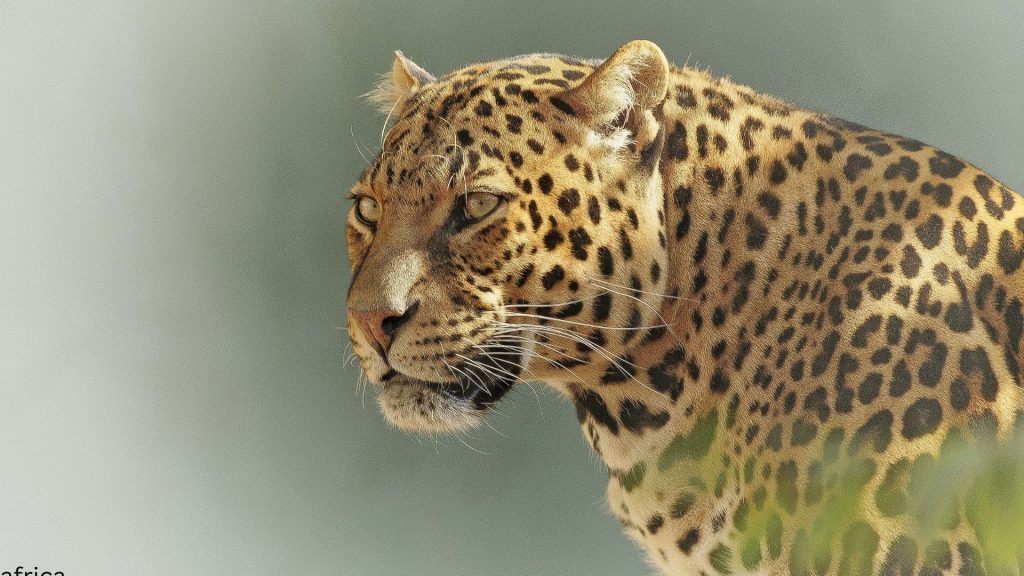
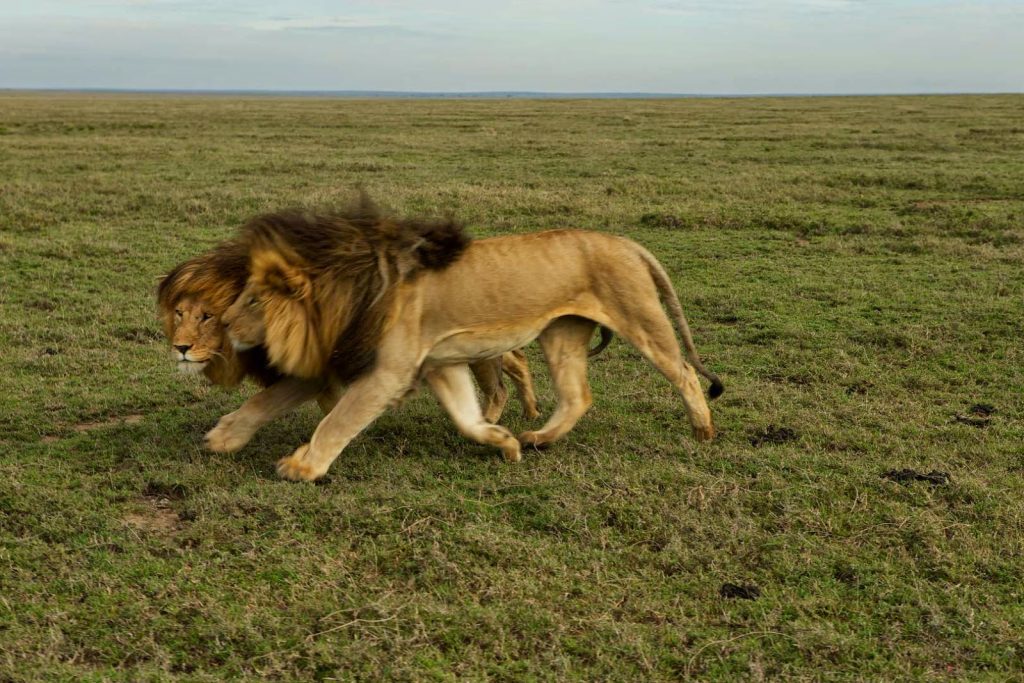
Ngorongoro Crater is home to an estimated 25,000 large animals, making it one of Africa’s most densely populated wildlife areas. It supports a strong population of lions, hyenas, jackals, and cheetahs. Wildlife researchers have studied the crater’s lion prides for decades, contributing valuable data to conservation science.
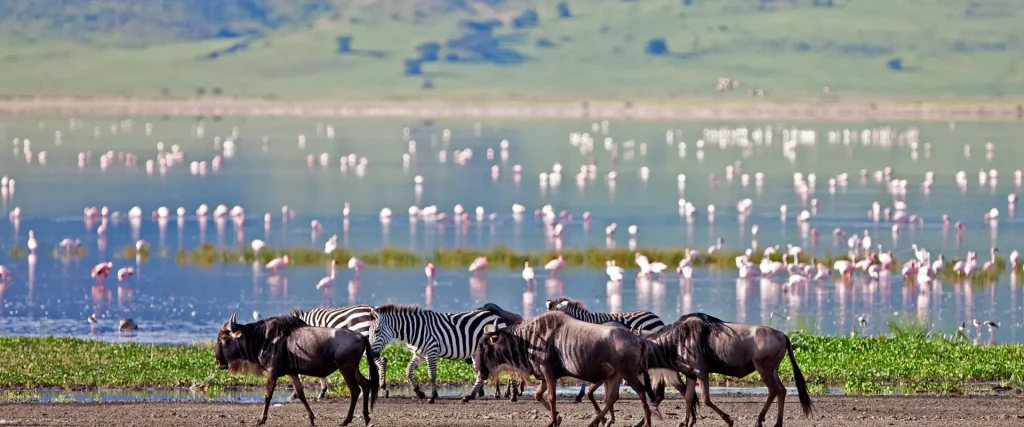
One of the most sought after sightings is the endangered black rhino, which still roams the crater floor under strict protection. Large tusked elephant bulls are often seen in the Lerai Forest, while hippos gather in permanent pools near the swamps. Flamingos frequently line the shores of Lake Magadi, adding a soft pink hue to the landscape.
The broader conservation area covers approximately 8,292 square kilometers and is recognized as a UNESCO World Heritage Site. It is not only important for wildlife but also for archaeology and anthropology, including the discoveries made at Olduvai Gorge that offer insight into early human history.
The Journey Through Northern Tanzania
Most safaris to Ngorongoro Crater begin in Arusha, a lively town known as the safari capital of northern Tanzania. From there, the drive toward the crater takes you through diverse scenery that gradually shifts from cultivated farmland to highland forests and rolling hills.
As you approach the crater rim, the air becomes cooler and the vegetation more lush. The descent into the crater is one of the highlights of the journey. The road winds carefully down the steep walls, revealing breathtaking views at every turn. Once on the crater floor, the sense of immersion is immediate. Wildlife is often visible within minutes of arrival.
What Makes Ngorongoro Crater Unique
The uniqueness of Ngorongoro lies in its natural enclosure and ecological balance. Few places in Africa allow visitors to observe such a wide range of species within a relatively small area. It is possible to see members of the Big Five in a single day, including lion, elephant, buffalo, and occasionally black rhino.
Another distinctive aspect is the coexistence of wildlife and the Maasai community within the larger conservation area. The Maasai continue their traditional pastoral lifestyle, grazing cattle in designated zones while participating in conservation efforts. This model of shared land use reflects a deeper cultural and environmental harmony rarely found elsewhere.
The crater also offers exceptional photographic opportunities due to its dramatic landscapes and consistent wildlife presence. Whether capturing a lion resting in golden grass or elephants walking beneath acacia trees, the backdrop of the crater walls creates a powerful sense of place.
Best Time to Visit Ngorongoro Crater
Ngorongoro Crater can be visited throughout the year, but certain seasons offer specific advantages. The dry season, which typically runs from June to October, is widely considered the best time for wildlife viewing. During this period, grass is shorter and animals gather around water sources, making them easier to spot. Clear skies and comfortable temperatures enhance the overall safari experience.
The green season from November to May transforms the crater into a lush and vibrant landscape. Although there may be occasional rainfall, this period brings fewer visitors and excellent birdwatching opportunities. Migratory birds arrive, and resident species display bright breeding colors. Photographers often appreciate the dramatic skies and fresh scenery during these months.
Why Choose Kiwoito Africa Safaris
A Tanzania safari to Ngorongoro Crater deserves careful planning and expert guidance. Kiwoito Africa Safaris offers thoughtfully crafted itineraries that prioritize comfort, safety, and meaningful experiences. With knowledgeable guides who understand animal behavior, seasonal patterns, and local culture, every game drive becomes informative and engaging.
Kiwoito Africa Safaris focuses on personalized service, ensuring that your journey reflects your interests and travel style. From the moment you arrive in Arusha to your final sunset overlooking the crater rim, the experience is designed with attention to detail and genuine hospitality. A safari to Ngorongoro Crater is more than a holiday. It is a connection to nature, history, and culture that stays with you long after you return home.
Frequent asked questions
How many days do I need for a Tanzania safari to Ngorongoro Crater?
Most travelers spend one full day exploring the crater floor, but a well paced safari usually includes two to three days in the Ngorongoro area. This allows time for travel from Arusha, a full crater descent, and optional visits to surrounding highlands or cultural sites within the Ngorongoro Conservation Area.
What animals can I see in Ngorongoro Crater?
Ngorongoro Crater supports approximately 25,000 large animals. Visitors commonly see lions, elephants, buffalo, zebras, wildebeest, and hyenas. The crater is also one of the best places in Tanzania to spot the endangered black rhino. Hippos gather in permanent pools, and flamingos often appear along the soda lake.
Is Ngorongoro Crater part of the Serengeti?
Ngorongoro Crater is not part of Serengeti National Park, but it is located in the same northern safari circuit. Both destinations are often combined in a single itinerary because they complement each other. Serengeti offers vast open plains and migration routes, while Ngorongoro provides a concentrated wildlife experience inside a volcanic caldera.
When is the best time to visit Ngorongoro Crater?
The dry season from June to October offers excellent wildlife viewing due to shorter grass and clear weather. However, the green season from November to May provides lush scenery, fewer visitors, and strong birdwatching opportunities. Ngorongoro is accessible year round, making it one of Tanzania’s most reliable safari destinations.
Is Ngorongoro Crater a UNESCO World Heritage Site?
Yes, the Ngorongoro Conservation Area is recognized as a UNESCO World Heritage Site due to its ecological importance, geological significance, and archaeological discoveries such as those at Olduvai Gorge.