Best Time to Visit Tanzania for Safari
Home » Best Time to Visit Tanzania for Safari
Overview
The wildebeest herds stretch across the southern Serengeti plains in early February. Thousands of calves drop within days while hyenas and lions circle the edges. A few hours drive away in Tarangire, massive elephant herds gather along the Tarangire River. These scenes play out every year. The timing of your trip decides how many of them you actually witness.
We run safaris out of Arusha year round. Some months deliver thick dust and easy sightings. Others bring green landscapes, lower prices and occasional afternoon showers. There is no single perfect time. The right month depends on your priorities, budget and tolerance for crowds or rain.
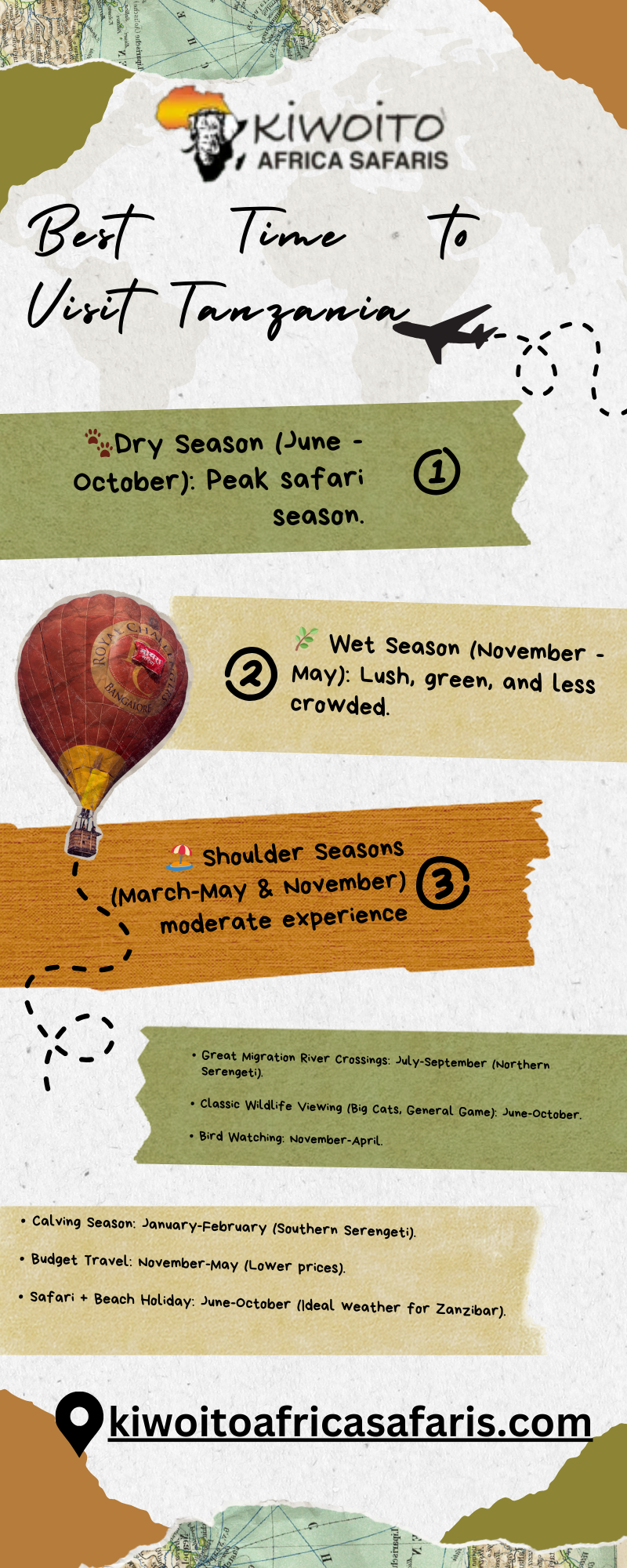
Tanzania Safari Seasons Explained
Tanzania sits near the equator so temperatures stay warm most of the year. The real difference comes from rainfall. Two main rainy periods shape the safari calendar. The long rains hit around April and May. Shorter rains arrive in November and December. Everything else counts as drier.
The long dry season from June through October brings peak conditions for most parks. Vegetation thins. Animals concentrate near permanent water. Tracks stay passable. This window suits first time safari goers who want reliable wildlife action.
The wetter months from November to May create the green season. Landscapes turn lush. Bird numbers explode. Crowds drop and rates fall. Photographers often prefer these months for dramatic light and fewer vehicles in frame.
Month by Month Breakdown for 2026
January to March These months fall in the short dry period after the November rains. Southern Serengeti hosts the calving season. Over 8000 wildebeest calves born daily in peak weeks create constant predator activity. Ngorongoro Crater and Tarangire offer solid general game viewing. Days stay warm. Nights cool down at higher elevations. Dust can rise on afternoon drives. This window works well for families wanting newborn animal action and photographers chasing dramatic hunt scenes.
April and May Long rains usually peak here. Many lodges reduce operations. Some tracks in central Serengeti become difficult. Wildlife spreads out with abundant water and grass. Birding reaches high levels with resident and migrant species. Rates drop significantly. We advise clients with tight schedules to avoid these months unless they accept possible disruptions. Serious green season enthusiasts or budget travelers sometimes choose late May when rains ease.
June to October This stretch forms the classic peak safari season. June brings the start of drier conditions. Vegetation shortens. By July the Great Migration river crossings intensify around the Mara River area in northern Serengeti. August and September often deliver the most consistent predator sightings across multiple parks. October remains excellent though numbers of visitors stay high. Tarangire elephants cluster along the river. Ngorongoro black rhinos stay more visible in shorter grass. Expect higher park fees during this period and book accommodations early.
November Short rains begin. Landscapes green up quickly. Migration herds start moving south toward Ndutu area. Crowds thin. Prices ease. This shoulder month offers good value for travelers who tolerate occasional showers.
December Rains vary but often remain manageable. Southern Serengeti herds build for calving. Holiday period brings more visitors so book popular lodges months ahead. Good light benefits photographers.
Best Time for Specific Experiences
Great Migration River Crossings July through September gives the highest chance in northern Serengeti. Herds mass near the Mara River. Crocodiles wait in the water. Crossings happen unpredictably so multiple days in the area improve odds.
Wildebeest Calving January and February in southern Serengeti and Ndutu. Predators stay active. This period suits travelers who prefer dramatic animal behavior over sheer numbers of adults.
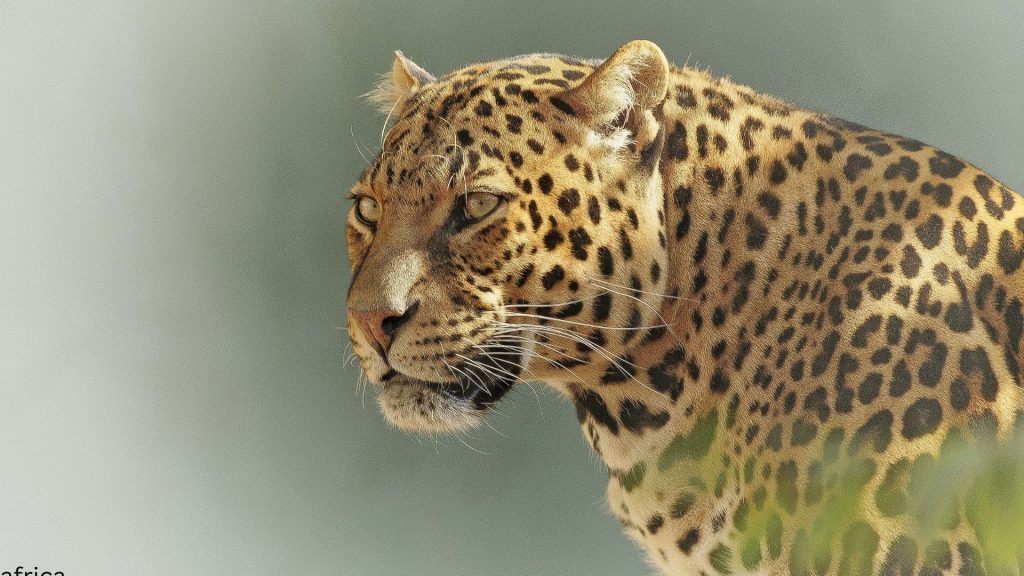
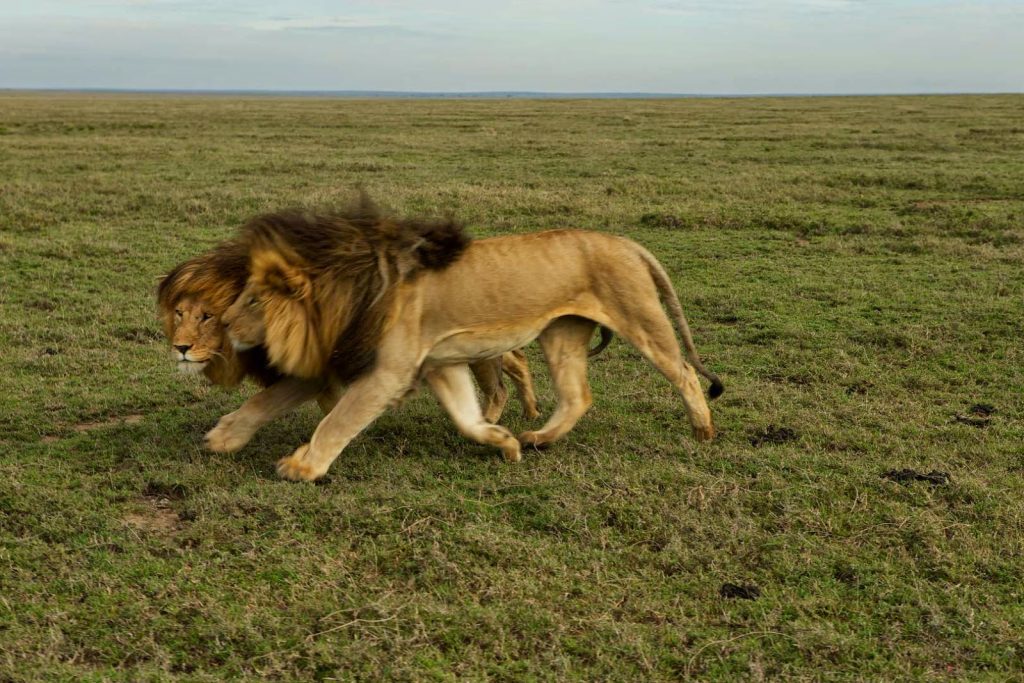
Big Cat and General Game Viewing June to October across Serengeti, Tarangire, Lake Manyara and Ngorongoro. Dry conditions force animals to predictable water sources.
Bird Watching November through April. Migratory species from Europe and Asia arrive. Selous Game Reserve and Ruaha National Park shine for bird diversity.
Photography Green season months offer rich colors and fewer vehicles. Dry season provides clear skies and concentrated action. We recommend shoulder periods for balanced light and access.
Family Safaris Dry season for easiest sightings and comfortable conditions. Families with younger children often prefer January February for calving or July August for migration energy.
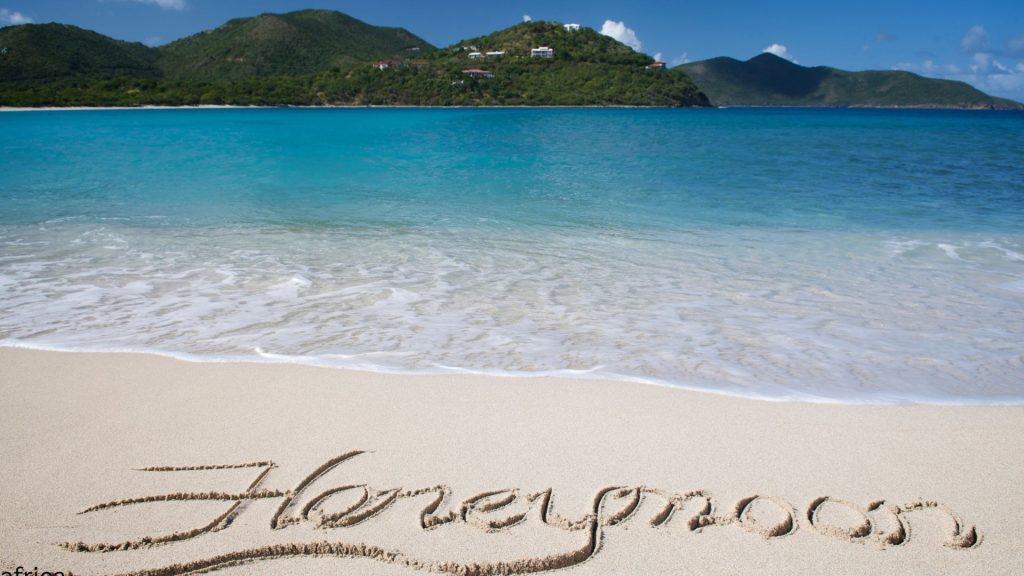
Honeymoon or Luxury Travel Any month works but June to October and January to March pair well with private camps and beach extensions in Zanzibar.
Budget Travel November to May delivers lower rates on lodges, vehicles and internal flights. Some premium camps close or reduce staff so confirm availability.
Honest Tradeoffs: When We Advise Against Coming
April and May bring real risks of flooded tracks and cancelled activities, especially in western Serengeti. We tell clients straight that these months suit only flexible travelers on lower budgets who accept green beauty over guaranteed sightings.
Peak July and August fill lodges fast. You pay top rates and share parks with more vehicles. Some clients feel the experience loses intimacy. September and October often balance good conditions with slightly fewer crowds.
We avoid promising perfect weather anywhere. Even in dry season an isolated shower can occur. Migration timing shifts slightly each year based on rains further south.
Certain lodges close or limit services in wet months. We recommend alternatives like shifting focus to parks such as Ruaha or Katavi that handle rain better.
How to Decide the Right Month for Your Trip
Start with your main goal. Prioritize migration drama then target July to September. Want newborn animals and predator action then choose January or February. Value and fewer people point toward November or March.
Consider your group. Families with school schedules often land in July or August. Retirees or flexible travelers enjoy shoulder months.
Budget matters. Dry season costs 20 to 40 percent more on average for the same itinerary. Factor in international flights too. European and North American school holidays drive prices up.
Combine with beach time in Zanzibar. Dry season offers best weather on the coast. Many clients fly from Arusha to Zanzibar after their safari.
Practical Planning and Pricing for 2026
A standard 7 day northern circuit in peak dry season currently ranges from 2800 to 5500 US dollars per person sharing, depending on lodge level. This includes park fees, vehicle, guide, meals and transfers. Ngorongoro Crater fees add around 70 dollars per person per visit. Serengeti fees run similar.
Green season packages often drop 15 to 30 percent. Some camps offer specials with extra nights or activities.
Book 6 to 12 months ahead for July to September. January to March needs 4 to 8 months notice. Shoulder periods allow shorter lead times.
Our Arusha office monitors conditions daily. We adjust itineraries in real time when weather affects access. Internal flights through companies like Coastal Aviation or Auric Air run regular schedules but wet season delays happen.
Why Travel with Kiwoito Africa Safaris
We operate from Arusha with a team that lives here year round. Many of our guides have worked with us for eight years or longer. Full TATO membership keeps us connected with park authorities and reliable lodge partners. Our vehicles are late model Toyota Land Cruisers maintained to high standards with roof hatches, charging points and comfortable seating.
Because we run trips every month we see real conditions on the ground. We adjust plans when rains arrive early or migration moves faster than expected. This practical knowledge helps clients avoid disappointment.
Suggested Next Steps
Tell us your preferred travel month, group size and main interests. We check lodge availability for 2026 and prepare a detailed itinerary with current pricing.