Calving season in Tanzania
Home » Calving season in Tanzania
Overview
Around 8,000 wildebeest calves drop onto the short grass plains of the southern Serengeti every single day at the height of Tanzania’s calving season. Not in total across the season. Every day. For several weeks running, the plains between Ndutu and the Ngorongoro highlands fill with newborns that are on their feet within minutes and running within hours. Lions, cheetahs, and hyenas work the same ground. The numbers are almost impossible to absorb until you are standing in the middle of it.
We have been taking clients to the calving grounds for years, and it remains one of the experiences that generates the most messages after people get home. Not the Mara River crossings, which get most of the press. The calving. There is something about witnessing birth and predation playing out simultaneously, at scale, in the same field of view, that stays with people in a way that a river crossing sometimes does not.
This guide covers the timing, the locations, the honest tradeoffs, the logistics, and the questions we get asked most often by people considering a January to March safari in Tanzania.
What Is the Calving Season and Why Does It Happen Here?
The wildebeest calving season is the annual window, roughly late January through mid March, when the majority of the roughly 1.35 million western white bearded wildebeest in the Serengeti ecosystem give birth. The timing and location are not random.
The short grass plains of the Ndutu area in the southern Serengeti sit directly downwind of the Ngorongoro Crater highlands. Over thousands of years, volcanic ash from the highlands has blown across and settled into these soils, enriching them with calcium, sodium, potassium, and phosphorus. The grasses that grow here are shallow rooted and extraordinarily nutritious. Pregnant wildebeest have evolved, over millennia, to arrive here as the short rains of November and December bring the grass to its nutritional peak.
The result is a near perfect calving environment. The grass is rich enough to sustain lactating mothers. The open, flat terrain means calves are mobile faster, and the herd can detect approaching predators at distance. The calving is also extraordinarily synchronised. The majority of births occur within a compressed window of two to three weeks in mid February. Estimates suggest that around 80 percent of all calves are born within this short period.
That synchronisation is itself a survival strategy. By flooding the plains with newborns simultaneously, the wildebeest overwhelm the capacity of local predators to take them all. A lion pride working the calving grounds can only consume so many calves per day. When 8,000 arrive every morning, most of them survive simply by weight of numbers. It is brutal arithmetic, and it works.
When Exactly Is the Calving Season?
The calving window runs from approximately late January through to mid March, with the peak concentration of births occurring during February. By the second half of March, most calves are several weeks old and mobile enough that the dynamics on the plains begin to shift. The herds start to consolidate and look northward.
A few honest caveats on timing. The Serengeti ecosystem is large and the migration does not follow a fixed calendar. The herds can arrive in the Ndutu area as early as late December in a year with early rains, or linger into April if the southern grass holds. We track rainfall patterns and herd movement in real time and adjust client positioning accordingly, which is one of the practical advantages of booking with a local operator rather than a fixed package operator working from a brochure.
If your dates are fixed and fall in January, February, or March, the calving is very likely to be the dominant wildlife event on the southern plains. If you have flexibility, mid February through early March gives you the highest statistical probability of witnessing peak births alongside active predator behaviour.
Where to Be: Ndutu, the Southern Serengeti, and the Ngorongoro Conservation Area
The calving grounds straddle the boundary between Serengeti National Park and the Ngorongoro Conservation Area, centred on the Ndutu region. This is important practically because it means you need accommodation that positions you to access both sides of this boundary without wasting hours of driving each morning.
Ndutu
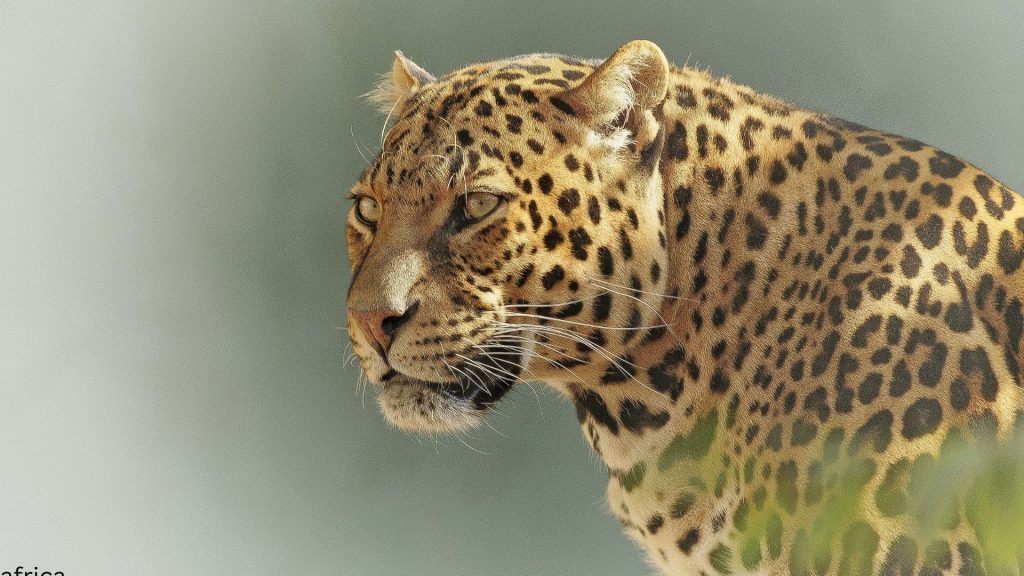
The Ndutu area, loosely bounded by Lake Ndutu and Lake Masek to the west and the Nabi Hill Gate to the northeast, is the epicentre. The woodland fringing the lakes holds resident lions, leopards, and cheetahs that know exactly what is about to happen each year and position themselves accordingly. The open plains beyond the woodland are where the herds concentrate and where most of the births and hunting occur.
Ndutu Safari Lodge is the oldest property in the area and sits directly on the lake edge. It is comfortable rather than luxurious, but its location is unmatched. Waking up to wildebeest on the lawn during peak calving is not unusual. Lemala Ndutu and &Beyond Ndutu Safari Lodge offer more contemporary comfort for clients who want a higher standard of room without sacrificing positioning.
We would not recommend driving into Ndutu from Karatu or Arusha on a day trip basis during this period. The distances are too great and you lose the critical early morning and late afternoon hours, which is exactly when predator activity is highest.
The Southern Serengeti Plains
The wide open plains south and southeast of the Ndutu woodland, stretching toward the Gol Kopjes and Naabi Hill, are where the herds spread when the Ndutu area becomes saturated. On days when the wildebeest are moving, you can drive for 40 kilometres across these plains and barely leave a herd that stretches to the horizon in every direction.
This is also where cheetah sightings can be exceptional during the calving. The open terrain and abundance of small calves suit cheetah hunting behaviour perfectly, and we often see more cheetah action here in February than at any other time of year across any other part of the northern circuit.
What You Will Actually See: An Honest Account
People sometimes arrive expecting a continuous, visible procession of births across every plain they drive through. The reality is more variable, and understanding that helps you appreciate what you do see.
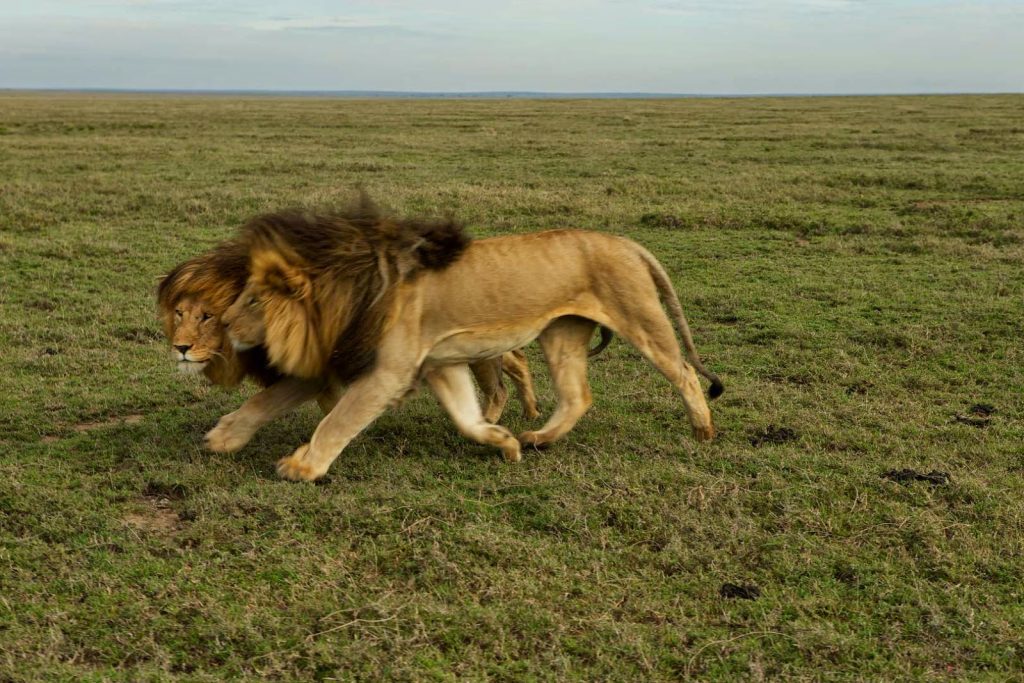
Births happen at all hours, but the morning hours after first light and the late afternoon before sunset are the most active periods overall for both births and predation. On a full day in Ndutu during peak calving, a typical game drive might include: dozens of newborns still wet from birth, at least one active predator hunt or chase, several lions feeding on a carcass, cheetahs resting between hunts, and the constant, restless movement of the main herds across the plains.
Some days, everything happens at once and the vehicle barely moves for an hour because there is too much to watch in one spot. Other days are quieter. That is the nature of wildlife. But the density of activity during the calving season is genuinely higher than almost any other period of the year, and even a quiet morning here produces more wildlife interaction than a busy day in many other parks.
One thing we tell clients honestly: the calving season involves watching animals die. Calves are taken by lions, hyenas, jackals, and occasionally martial eagles within minutes of birth. If you have young children who may struggle with this, talk to us before booking. We are not trying to discourage you, we just want you prepared. Most adults find the predator action one of the most compelling parts of the experience. It is raw, direct, and impossible to look away from.
Calving Season vs. Mara River Crossings: Which Should You Choose?
This is the question we get most often from clients who can only come once and want to make the right call.
The Mara River crossings in July through October are the most dramatic single event in the migration, full stop. Thousands of wildebeest plunging into a crocodile filled river in chaotic, terrifying surges is something that photographs and film genuinely cannot replicate. If you are chasing one iconic image, the crossings are it.
But the calving season is, in our experience, the richer and more sustained wildlife experience. The action is not concentrated into one dramatic moment at a river bank. It plays out continuously across the plains for weeks. The density of predator sightings is higher. The green season light is softer and better for photography. There are significantly fewer vehicles on the plains compared to peak crossing season in August. And the park fees are lower.
If you can only choose one, choose based on what matters most to you. If you want the image that has been on every magazine cover, go to the crossings. If you want depth, variety, and a more personal experience with fewer crowds, come for the calving.
Practical Planning: Costs, Logistics, and What to Know Before You Book
Park Fees and Costs
The Ndutu area straddles two fee zones. Access to the Ngorongoro Conservation Area costs USD 82.60 per adult per day as of 2025, while Serengeti National Park fees are also payable when you cross into the park. Your driver guide will manage both sets of fees as part of your daily game drive. These costs are included in all Kiwoito Africa Safaris packages and not added as a surprise at the gate.
Accommodation in Ndutu ranges from around USD 250 per person per night at comfortable mid range camps to USD 600 and above per person per night at the higher end properties. Full board is standard across all camps in this area, as there is nowhere else to eat.
Getting There
Ndutu is approximately 130 kilometres from Arusha by road, passing through Karatu. The drive takes roughly three and a half to four hours on a good day, including the stretch on unpaved roads through the conservation area. Many clients flying into Kilimanjaro International Airport prefer to break the journey with a night in Karatu or at a lodge on the rim of the Ngorongoro Crater before continuing to Ndutu the following morning.
Alternatively, charter flights from Arusha to the Ndutu airstrip take around 45 minutes and are available through several light aircraft operators. We can arrange these as part of your itinerary.
When Not to Come for Calving
If your travel dates fall in December or April, the calving season is not what you will find in Ndutu. December is the early rains period when herds may or may not have arrived on the southern plains. April sees the herds beginning to move north, and the long rains can make some tracks impassable. Both can still be excellent safari months in other parts of the northern circuit, but we would not position you primarily in Ndutu in either month and call it a calving safari.
Why Travel with Kiwoito Africa Safaris for the Calving Season
We are a licensed Tanzanian safari operator based in Arusha, registered with the Tanzania Association of Tour Operators (TATO) and the Tanzania Tourist Board. Our vehicles are custom fitted Toyota Land Cruisers with pop up roofs, charging points, and enough space for a maximum of six passengers per vehicle. We do not pack eight people into a seven seat vehicle, which some operators do.
Our guides live and work in northern Tanzania year round. They are not seasonal staff. They know the Ndutu area personally, track herd movements through the season, and understand the micro geography of the calving grounds in a way that makes a real difference to what you see each morning. When a guide knows which drainage line the cheetah coalition used last week, or which section of the Ndutu woodland the resident lion pride has been using, it changes the quality of your game drive fundamentally.
We include all park and conservation area fees in our package pricing with no gate surprises. We offer full board accommodation across all calving season properties and coordinate charter flights to Ndutu where requested. Our TripAdvisor rating stands at 5.0 from over 200 reviews, and our Google rating at 4.9 from over 100 reviews.
If you are considering a calving season safari and want a straight, honest conversation about whether your dates, budget, and expectations are the right fit, we would rather have that conversation now than have you arrive with the wrong expectations.