


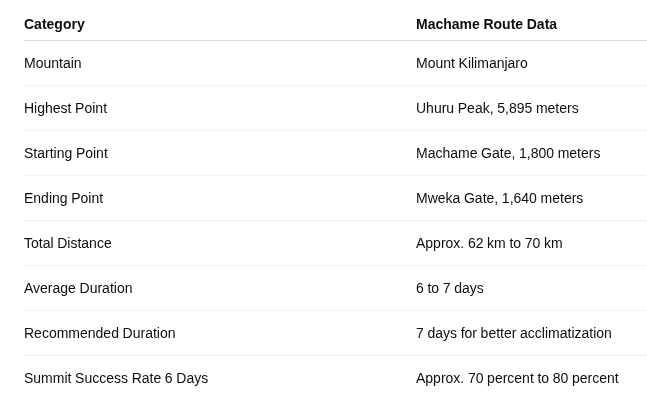
Unique Features of the Machame Route
Machame is often referred to as the Whiskey Route due to its steeper and more demanding sections compared to easier alternatives. It offers richer scenery and a more varied trekking experience.
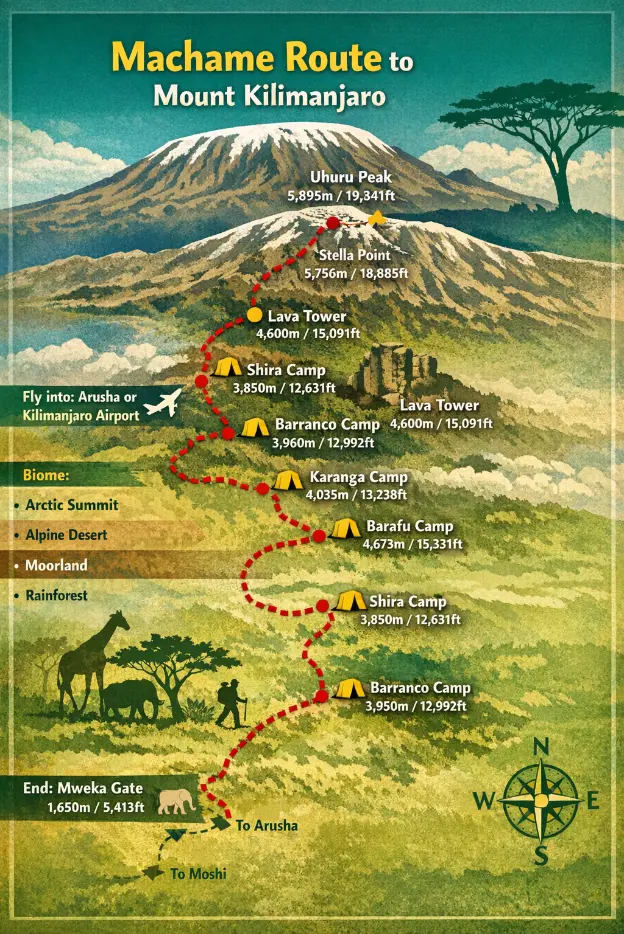
The trail ascends through rainforest to Machame Camp, where giant trees and mist create a dramatic start. As you climb toward Shira Plateau, the forest opens into wide views of Kibo Peak. The Barranco Wall stands out as one of the most iconic sections of the entire mountain. Though it appears vertical from below, it is a controlled scramble guided step by step. Many climbers describe this moment as the turning point of confidence during the climb.
Another defining element is the scenic traverse beneath the Southern Glaciers before reaching Barafu Camp. From here, summit night begins around midnight. Headlamps trace a slow path upward as temperatures drop below freezing. Reaching Stella Point at sunrise marks a major milestone, followed by the final stretch to Uhuru Peak where glaciers reflect early morning light.
Best Time to Climb the Machame Route
Weather plays a direct role in safety and comfort on Kilimanjaro. The most favorable periods fall within Tanzania’s dry seasons.
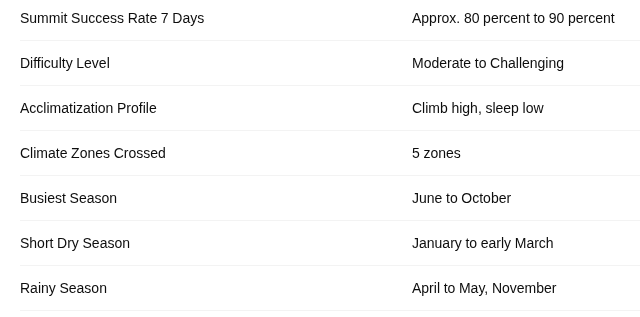
January to early March offers clearer skies and slightly warmer conditions at mid elevations. Snow can still appear near the summit, but visibility is often strong. June through October remains the busiest season due to stable weather and minimal rainfall. Trails are drier, though camps are more crowded.
April and May bring long rains, which make the rainforest zone muddy and reduce summit visibility. November has short rains that are lighter but less predictable. Climbers who prioritize clearer views and stable footing often choose the dry months.
Machame Route Map
Physical Preparation and Safety Considerations
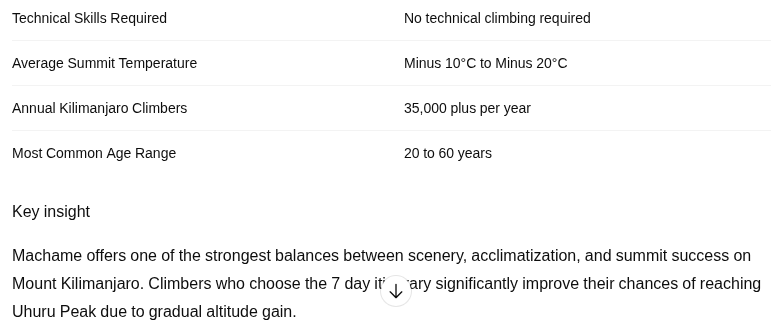
Climbing Kilimanjaro does not require technical mountaineering skills, yet it demands endurance and discipline. Training should focus on long-distance hiking, leg strength, and cardiovascular conditioning. Proper layering for temperature shifts from tropical heat to sub-zero summit conditions remains critical.
Tanzania regulations require licensed guides for all climbs. Professional crews monitor oxygen saturation levels daily and assess symptoms carefully. Responsible operators also ensure ethical porter treatment and environmental conservation throughout the climb.
Why Climb with Kiwoito Africa Safaris
At Kiwoito Africa Safaris, we guide Machame Route climbs with experienced mountain teams who understand altitude management, pacing, and weather conditions specific to Kilimanjaro. We plan realistic itineraries that support acclimatization and safety at every stage.
Our focus stays on preparation, detailed briefings, quality equipment, and strong on mountain support. Climbing Kilimanjaro is both a physical and personal journey. With the right team, your chances of reaching Uhuru Peak improve while the entire experience remains structured, safe, and memorable.