7 Days Kilimanjaro Trekking Machame Route Tour Overview
The Machame Route, or “Whiskey Route,” is Mount Kilimanjaro’s most popular camping route. It’s known for its scenic trails and diverse landscapes.
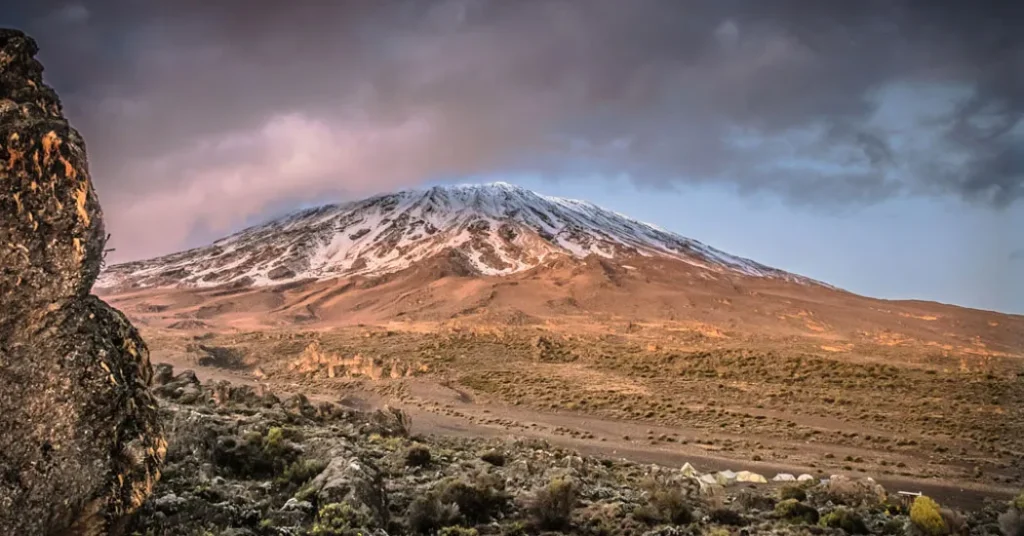
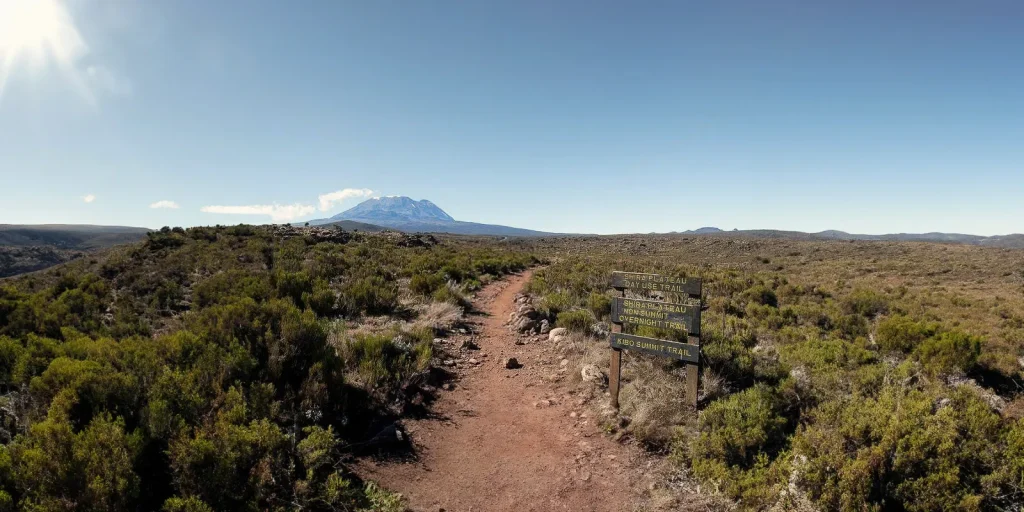
The climb begins in the rainforest at Machame Village, located on the mountain’s southwest side. From there, the trail ascends to the Shira Plateau before dropping into the stunning Great Barranco Valley. You then continue around the Kibo massif, crossing alpine desert terrain before arriving at Barafu Camp.
Summit night begins at Barafu Camp. The Mweka Route takes you through steep scree slopes to the crater rim, from where you can continue to the summit. Every day brings a new landscape, ranging from forest to moorland to high-altitude desert.
This route is more difficult due to altitude and a shorter recovery period before the final summit push. You must be physically fit and have a clear mind.
There are no huts along this route. Throughout the climb, you sleep in mountain tents and eat in specially designated dining tents.
Day by day
DAY 1: Machame Gate to Machame Camp
•Elevation (ft): 5,400ft to 9,400ft •Distance: 11 km •Hiking Time: 5-7 hours •Habitat: Rain Forest
The drive from Moshi to the Mount Kilimanjaro National Park Gate takes about 50 minutes. The journey passes through the village of Machame, which is located on the mountain’s lower slopes.
We now leave the park gate and proceed up a winding trail through the rainforest to a ridge. Lower down, the trail could be muddy and slippery. Gaiters and trekking poles are suggested here. We travel a short distance to the Machame Camp.
DAY 2 : Machame Camp to Shira Camp
•Elevation (ft): 9,400ft to 12,500ft •Distance: 5 km •Hiking Time: 4-6 hours •Habitat: Moorland
After breakfast, we leave the rainforest glades and continue up an ascending path, crossing a small valley and walking along a steep rocky ridge covered in heather until we reach the end. The route now travels west through a river gorge. It’s time to relax, eat, and spend the night at the Shira campsite.
DAY 3 : Shira Camp to Lava Tower to Barranco Camp
•Elevation (ft): 12,500ft to 13,000ft •Distance: 10 km •Hiking Time: 6-8 hours •Habitat: Semi Desert
From the Shira Plateau, we head east up a ridge, past the junction and toward Kibo’s peak. Our path takes us southeast, towards the “Shark’s Tooth” Lava Tower. Shortly after the tower, we reach the second junction, which leads to the Arrow Glacier at an elevation of 16,000 feet. We are now descending to the Barranco Hut at an altitude of 13,000 feet. Here we rest, eat, and spend the night. Although you end the day at the same elevation as when you started, this day is important for acclimatization and will help your body prepare for summit day.
DAY 4 : Barranco Camp to Karanga Camp
•Elevation (ft): 13,000ft to 13,100ft •Distance: 5 km •Hiking Time: 4-5 hours •Habitat: Alpine Desert
After breakfast, we leave Barranco and hike up a steep ridge past the Barranco Wall to the Karanga Valley campsite. This is a short day designed for acclimatization.
DAY 5: Karanga Camp to Barafu Camp
•Elevation (ft): 13,100ft to 15,300ft •Distance: 4 km •Hiking Time: 4-5 hours •Habitat: Alpine Desert
After breakfast, we leave Karanga for the Mweka Trail junction. We continue to the Barafu Hut. After completing the South Circuit, you can see the summit from a variety of angles. We set up camp, rested, ate dinner, and got ready for summit day. This vantage point provides views of the Mawenzi and Kibo peaks.
DAY 6: Barafu Camp to Summit to Mweka Hut
•Elevation (ft): 15,300ft to 19,345ft (and down to 10,000ft) •Distance: 5 km ascent / 12 km descent •Hiking Time: 7-8 hours ascent / 4-6 hours descent
•Habitat: Arctic
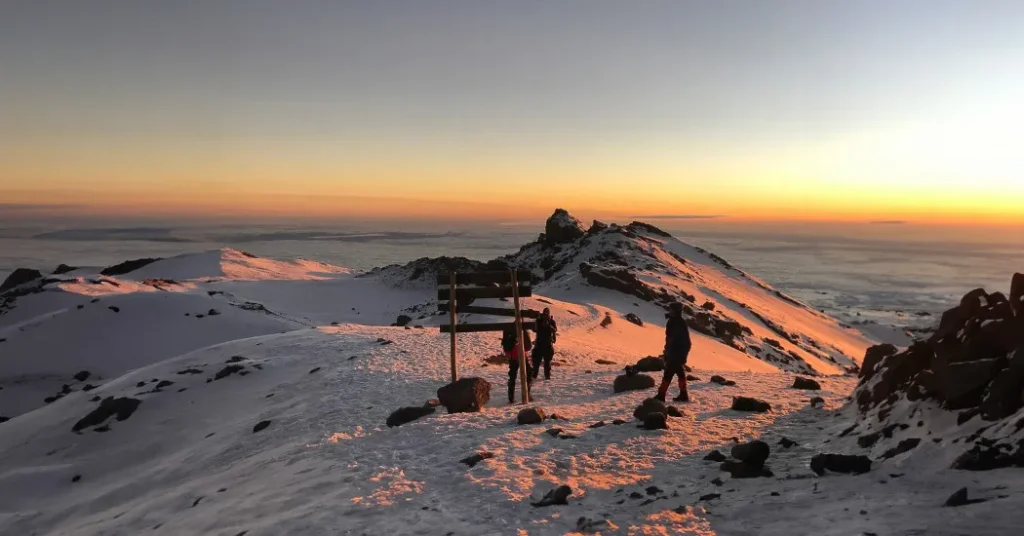
We resume our journey to the summit between the Rebmann and Ratzel glaciers at very early hours (midnight to 2 a.m.). You head northwest and ascend through dense scree to Stella Point on the crater rim. This is the most mentally and physically demanding portion of the journey.
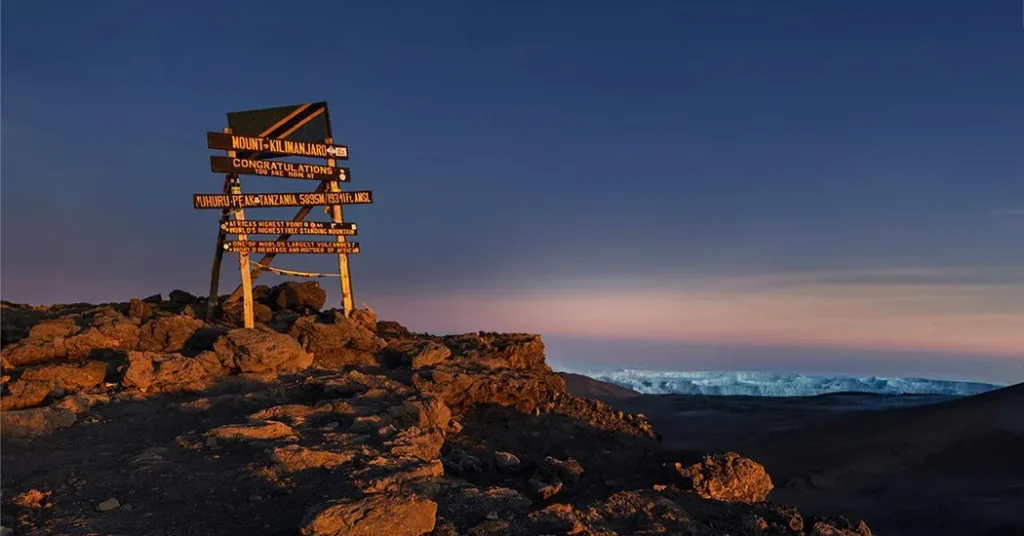
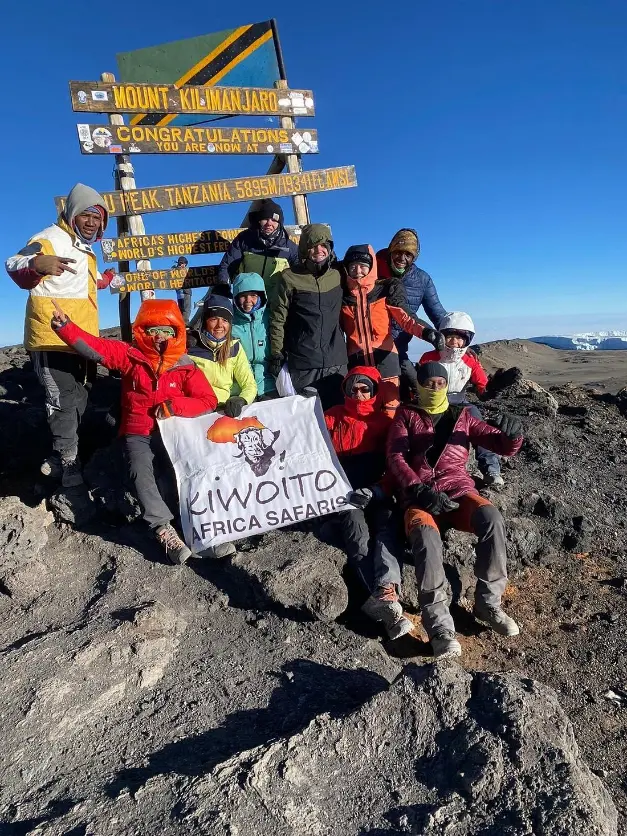
Take a short break at Stella Point (18,600 ft) and enjoy the breathtaking sunrise (weather permitting). The 1-hour climb to the summit from Stella Point may involve encountering snow throughout. Uhuru Peak is the highest point on Mount Kilimanjaro and the continent of Africa. Faster hikers can view the sunrise from the summit.
We descend from the summit to the Mweka Hut camp site, stopping at Barafu for lunch. Gaiters and trekking poles are recommended for negotiating loose gravel. Mweka Camp is situated in the upper forest, so expect mist or rain in the late afternoon. In the evening, we have our final dinner on the mountain and relax before going to bed.
DAY 7: Mweka Camp to Moshi
•Elevation (ft): 10,000ft to 5,400ft •Distance: 10 km •Hiking Time: 3-4 hours •Habitat: Rain Forest
Following breakfast, we will continue our descent to the Mweka Park Gate, where you will receive your summit certificates. At lower elevations, it could be wet and muddy. Gaiters and trekking poles will be helpful. Shorts and T-shirts should suffice (be sure to pack rain gear and warmer clothing). It takes another hour from the gate to reach Mweka Village. A vehicle will meet you in Mweka village and take you back to your hotel in Moshi.
Price
PAX
2 PAX
4 PAX
6 PAX
Price
$ 2,495
$ 2,145
$ 2,079
Inclusions
Safety Equipment:
Professional Mountain Guides, all head guides (at least 1 per trip) currently certified by NOLS USA as WFR (Wilderness First Responder)
Park Fees
Campsite fees
Emergency Rescue Fees
Camping equipment and other gears:
Mountain Meals
Transfer from the hotel to the starting point
Transfer from the last point to the hotel
Exclusions
Accommodation upon arrival and last day
Tips for a mountain guide, recommended 15-20 per group per day
Porters 5 – 10$ per porter per group per day
Personal expenses
Personal items
Personal insurance/travel insurance
Personal medicines/first aid kit
Personal trekking gears
Sleeping bag
Frequently asked questions (FAQs)
Is the Machame Route suitable for beginners?
Yes, for physically prepared beginners. While it is more challenging than Marangu, the gradual ascent over 7 days allows for good acclimatization and a higher summit success rate.
What should I pack for a 7-day trek?
Essential items include layered clothing, trekking boots, gloves, hat, trekking poles, sunscreen, headlamp, daypack, and reusable water bottles. Layering is key for varying temperatures.
Are guides and porters included?
Yes. Professional guides, porters, and cooks accompany trekkers throughout, providing support, carrying gear, and ensuring safety.
Can the itinerary be customized?
Yes. The 7-day Machame trek can be adjusted for extra acclimatization, combined with a safari, or tailored to match your pace and preferences.
What type of accommodation is provided?
Machame is a camping route, with comfortable tents at each campsite. Meals are prepared by experienced cooks, and porters assist with luggage and camp setup.