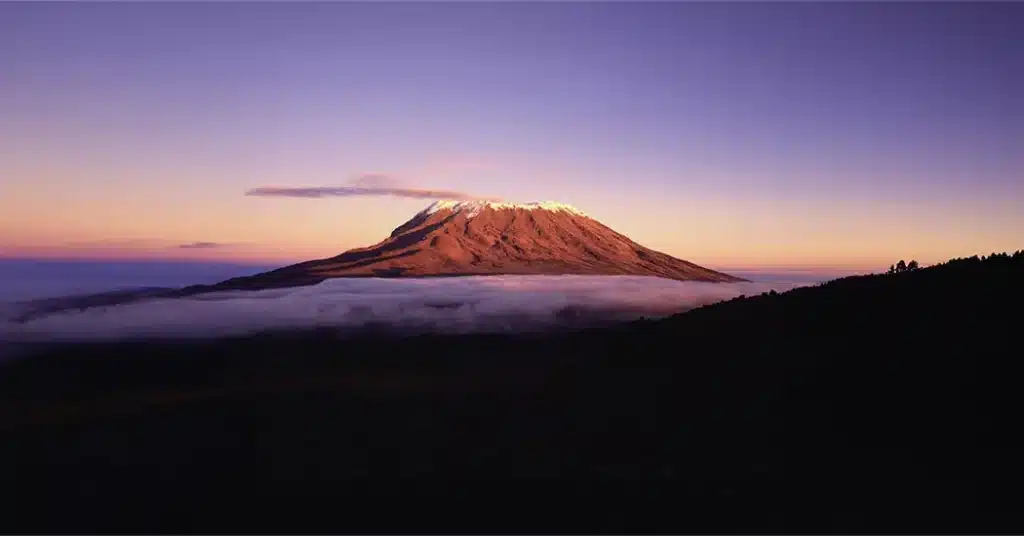
Climb Mount Kilimanjaro on a 6-day trek along the Rongai Route, the only trail that approaches the mountain from the north near Kenya’s border. This route is known for its peaceful atmosphere, gentle slopes, and remote feel, making it ideal for hikers who prefer fewer crowds.
The journey begins in open countryside and forest, then progresses to moorlands and alpine terrain as you gain elevation. Rongai is often drier and more sheltered than other routes, which can lead to more stable trekking conditions. Along the way, there are opportunities to see wildlife such as antelope and various birds.
You will trek steadily toward the summit, aided by experienced guides and porters. The climb culminates in a night ascent to Uhuru Peak, Africa’s highest point, from which you can enjoy panoramic views of the surrounding landscape.
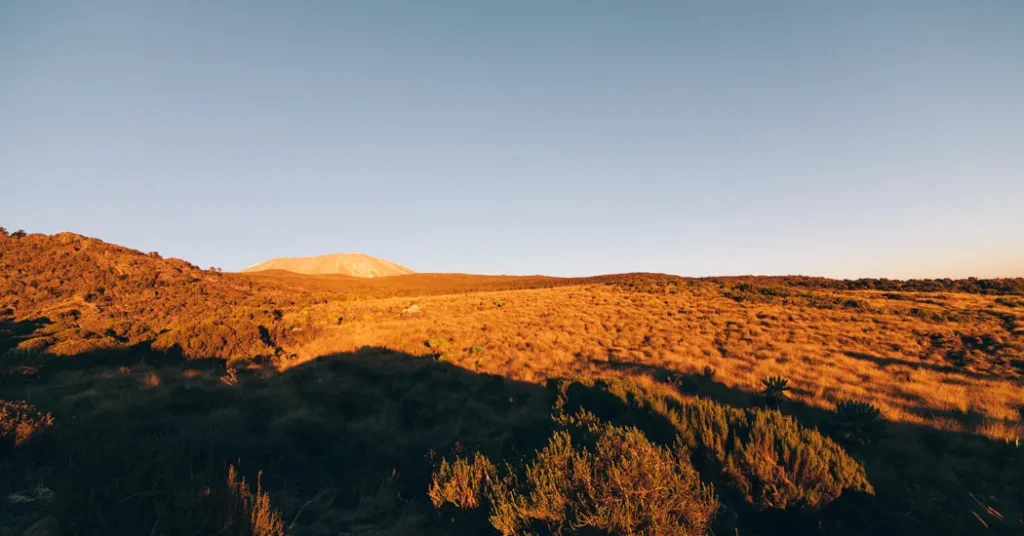
A 4-5-hour drive from Moshi takes you past coffee farms and the village of Nale Muru to the Kilimanjaro National Park Gate. We will patiently wait for our permits to be issued while we observe the busy operations as many crews prepare for the journey ahead. Enjoy the beautiful wooded scenery and winding trails while your guide discusses the local plants and animals, as well as any wildlife you may encounter. Simba camp is near the first cave on the edge of the moorland zone. It offers spectacular views of the Kenyan plains.
DAY 2: SIMBA CAMP – SECOND CAVE CAMP: 5.8KM/3.6MI | 5-6HRS | MOORLAND
Elevation: 2635m/8645ft to 3487m/11,440ft
Altitude gained: 852m
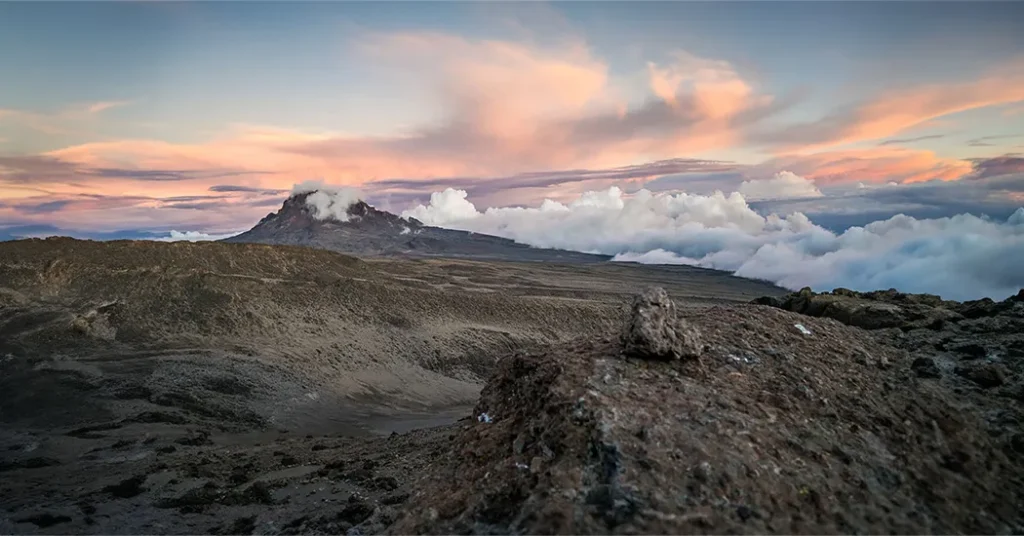
Following a good night’s sleep and a hearty breakfast, we continue on a steady ascent through the moorland terrain. You’ll get your first glimpse of the ice fields on the Eastern crater rim, as well as some spectacular views of Kibo. The moorland’s small shrubs became thinner as you approved the Second Cave. Temperatures begin to drop.
DAY 3: SECOND CAVE CAMP – THIRD CAVE CAMP: 3.3KM/2MI | 3-4HRS | SEMI-DESERT
DAY 4: THIRD CAVE CAMP- KIBO HUTS: 6.7KM/4.2MI | 4-5HRS | ALPINE DESERT
Elevation: 3936m/12,913ft to 5174m/16975ft
Altitude gained: 1238m
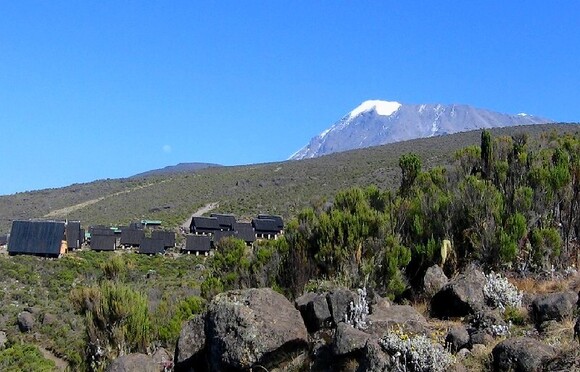
You will leave the semi-desert zone of the Third Cave early in the morning and continue your ascent through the Alpine Desert terrain. Today’s hike will take you just below the Kibo crater wall to the Kibo Huts. Continue on the Marangu Route to the summit. You will prepare your clothing and equipment (replace batteries in your headlamp and camera) before going to bed at 7 p.m., and you will try to get a few hours of sleep before attempting the summit.
DAY 5: KIBO HUTS – SUMMIT: 4KM /2.5 MI UP | 5-7HRS | – HOROMBO HUTS: 15.75KM /9.8MI DOWN | 5-6HRS | GLACIERS, SNOW CAPPED SUMMIT
Elevation: 5174m/16975ft to 5895m/19,341ft
Altitude gained: 721m
Descent to 3721m/12,208ft
Altitude lost: 2174m
Excitement builds as the morning approaches, with an early start between midnight and 2 a.m. This is the most mentally and physically demanding portion of the journey.
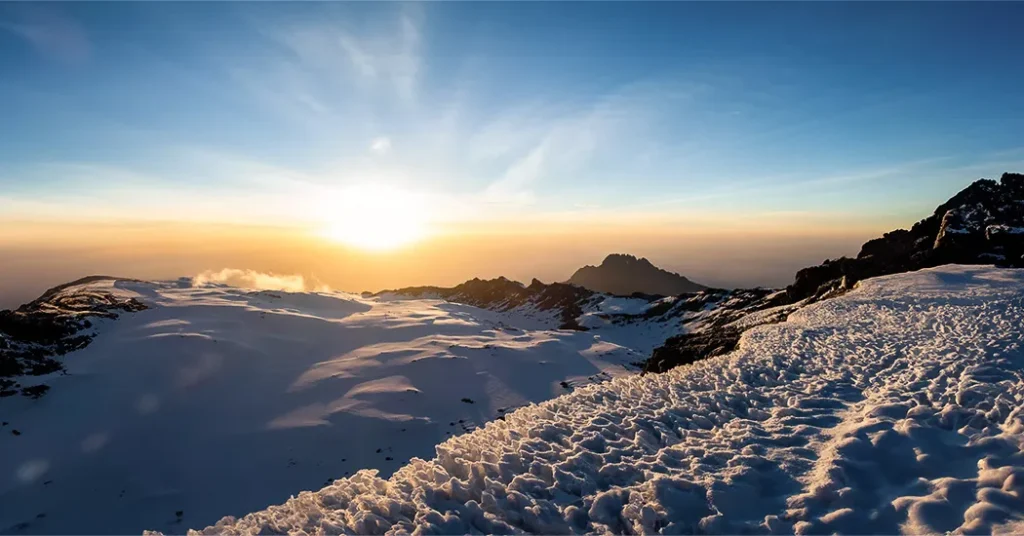
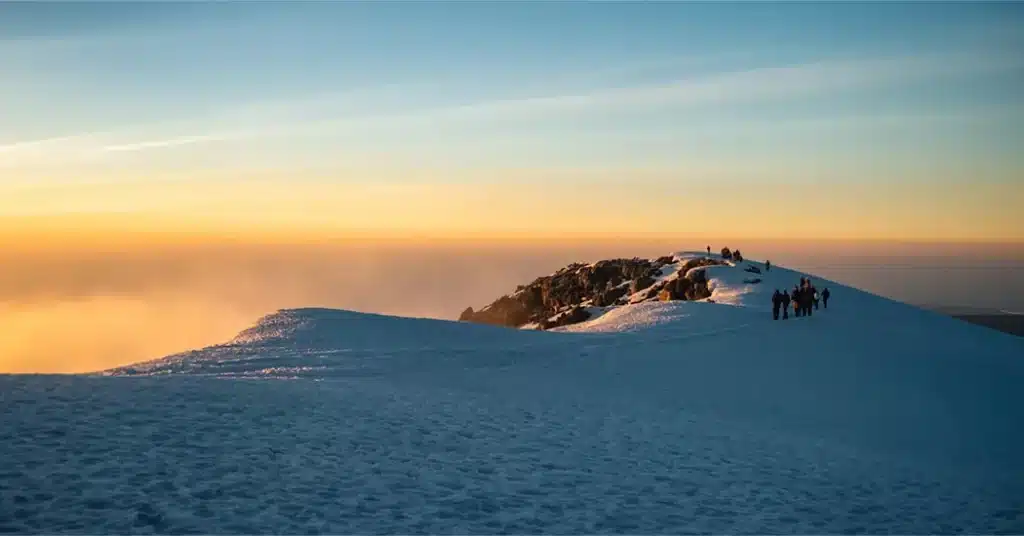
We continue our journey to the summit between the Rebmann and Ratzel glaciers, trying to stay warm and focused on the incredible sense of accomplishment that lies ahead. Ascend through heavy scree in a northwesterly direction, using switchbacks, to Stella Point on the crater rim. During your brief stay, you will be rewarded with a stunning sunrise. Faster hikers may see the sunrise from the summit. The final 1-hour ascent to Uhuru Peak is likely to be snow-covered.
Congratulations, one step at a time, you have now reached Uhuru Peak, Mount Kilimanjaro’s highest point and the continent of Africa!
After photos, celebrations, and possibly a few tears of joy, we take a moment to appreciate this incredible achievement. We begin our steep descent to Mweka Camp, stopping in Barafu for lunch and a quick rest. We strongly advise using gaiters and trekking poles in uncooperative loose gravel and volcanic ash terrains. As you spend your final evening on the mountain, you’ll get some well-deserved rest. Overnight stay at Mweka Camp.
After breakfast and a heartfelt gratitude and team bonding ceremony with your crew, it’s time to say goodbye. We continue our descent, pausing at the Mandara Huts for lunch. Remember to tip your guides, cooks, and porters because you are leaving them here. You return to the Marangu Park Gate to collect your summit certificates. Because the weather is much warmer, the terrain is wet, muddy, and steep, so we strongly advise wearing gaiters and trekking poles. A vehicle will meet you at the gate and transport you back to your Moshi hotel (approximately 45 minutes). Enjoy a long-awaited hot shower, dinner, and festivities!
Price
PAX
2 PAX
4 PAX
6 PAX
Price
$ 2,059
$ 1,865
$ 1,864
Inclusions
Safety Equipment:
Professional Mountain Guides, all head guides (at least 1 per trip) currently certified by NOLS USA as WFR (Wilderness First Responder)
Park Fees
Campsite fees
Emergency Rescue Fees
Camping equipment and other gears:
Mountain Meals
Transfer from the hotel to the starting point
Transfer from the last point to the hotel
Exclusions
Accommodation upon arrival and last day
Tips for a mountain guide, recommended 15-20 per group per day
Porters 5 – 10$ per porter per group per day
Personal expenses
Personal items
Personal insurance/travel insurance
Personal medicines/first aid kit
Personal trekking gears
Sleeping bag
Frequently asked questions?
What should I pack for a 6-day Rongai trek?
Bring layered clothing, warm gear, trekking boots, gloves, hat, trekking poles, headlamp, and a daypack. Proper preparation ensures comfort through the changing temperatures and terrain.
Is the Rongai Route suitable for beginners?
Yes, for physically prepared beginners. The steady pace and moderate difficulty make it a good option for first-time climbers.
Are guides and porters included?
Yes. Each trek includes experienced guides and porters, who assist with safety, carry equipment, and prepare meals.
Can the itinerary be customized?
Yes. The trek can be extended for extra acclimatization, combined with a safari, or adjusted to suit your pace and preferences.
What type of accommodation is provided?
The trek is a camping route, with tents set up at each campsite. Porters and guides assist with luggage, and meals are prepared daily.